Why Lavender?
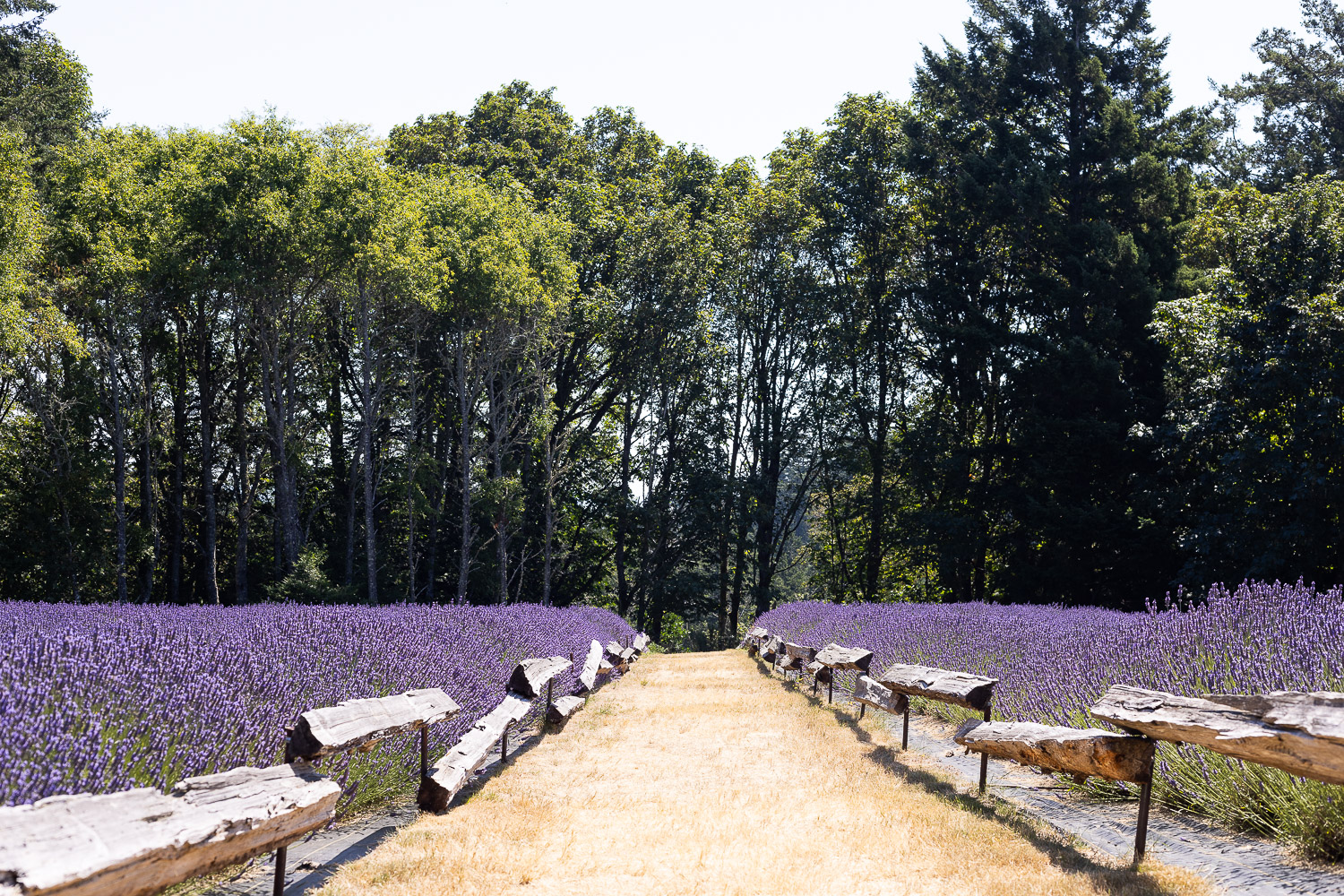
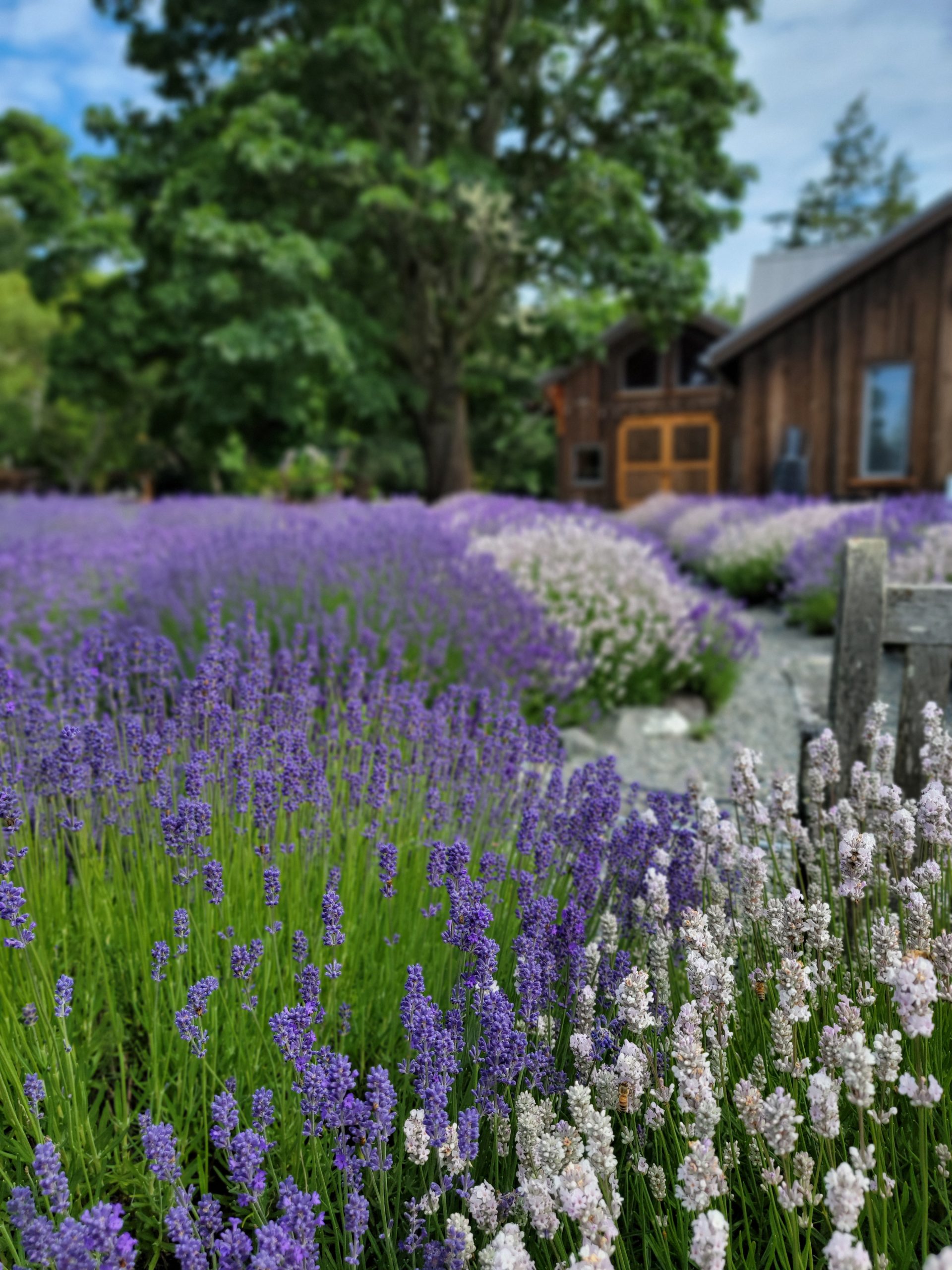
Lavender is the crop of choice due to the mild climate on the west coast of Vancouver Island, and wonderful sandy soil, allowing high yields per acre.
After researching which lavender grows best in this region, two main cultivars were chosen, and propagation began in 2004 until over 4,000 plants were created! Lavender, a Mediterranean herb, prefers a mild climate with 8 hours of full sun per day. Like grapes, the plants need “sweet soil” with a pH over 7, and in the wet north pacific, the soil needs annual amendment with lime to keep it from becoming acidic. Soil rich in organic matter produces nice green plants; whereas, a harsh, thick, gravelly environment encourages abundant flowers full of lavender oil.
Our Lavender
Bilston grows two main types of Lavender:
- Lavandula angustifolia, the sweeter fragrant English cultivars, such as Folgate, and
- a hybrid cross between Lavandula angustifolia and Lavandula latifolia known as Grosso.
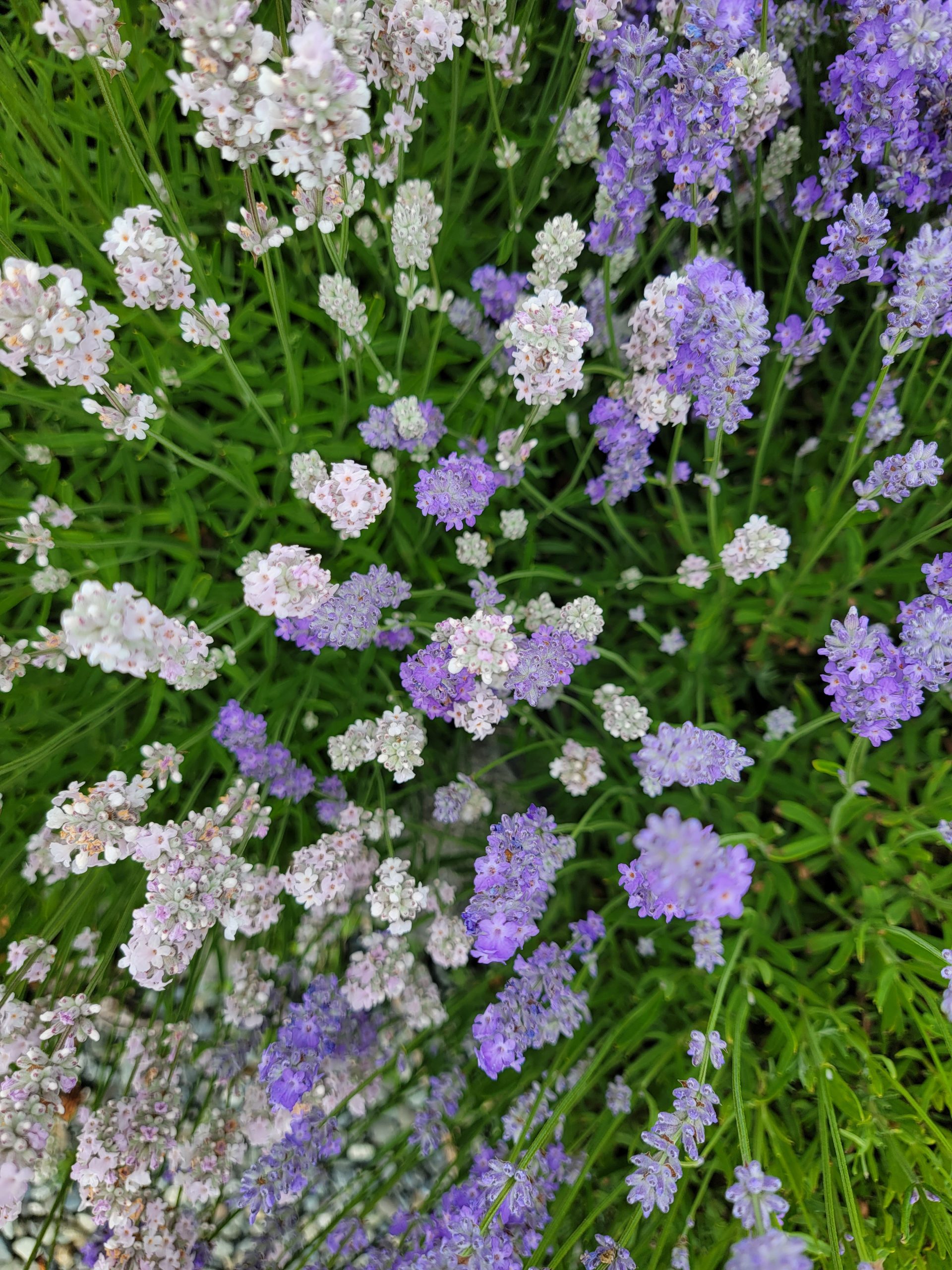
Folgate blooms a soft violet blue early in June and is one of the hardiest English lavender cultivars.
Grosso, found in our main field, is a popular plant in the lavender farming world because of its high oil yielding spike flowers. It’s a dense plant that can grow to approximately 75 centimetres tall with the spikes up to 9 centimetres long making it a great hedge plant.
The other angustifolia cultivars grown include “Munstead”, “Hidcote”, “Big Time Blue”, “Ashdown Forest”, and “Melissa Pink”. These cultivars bloom in a variety of colours from deep blue to light pink and are used for the sweet fragrant smell and culinary buds.
Lavender Season
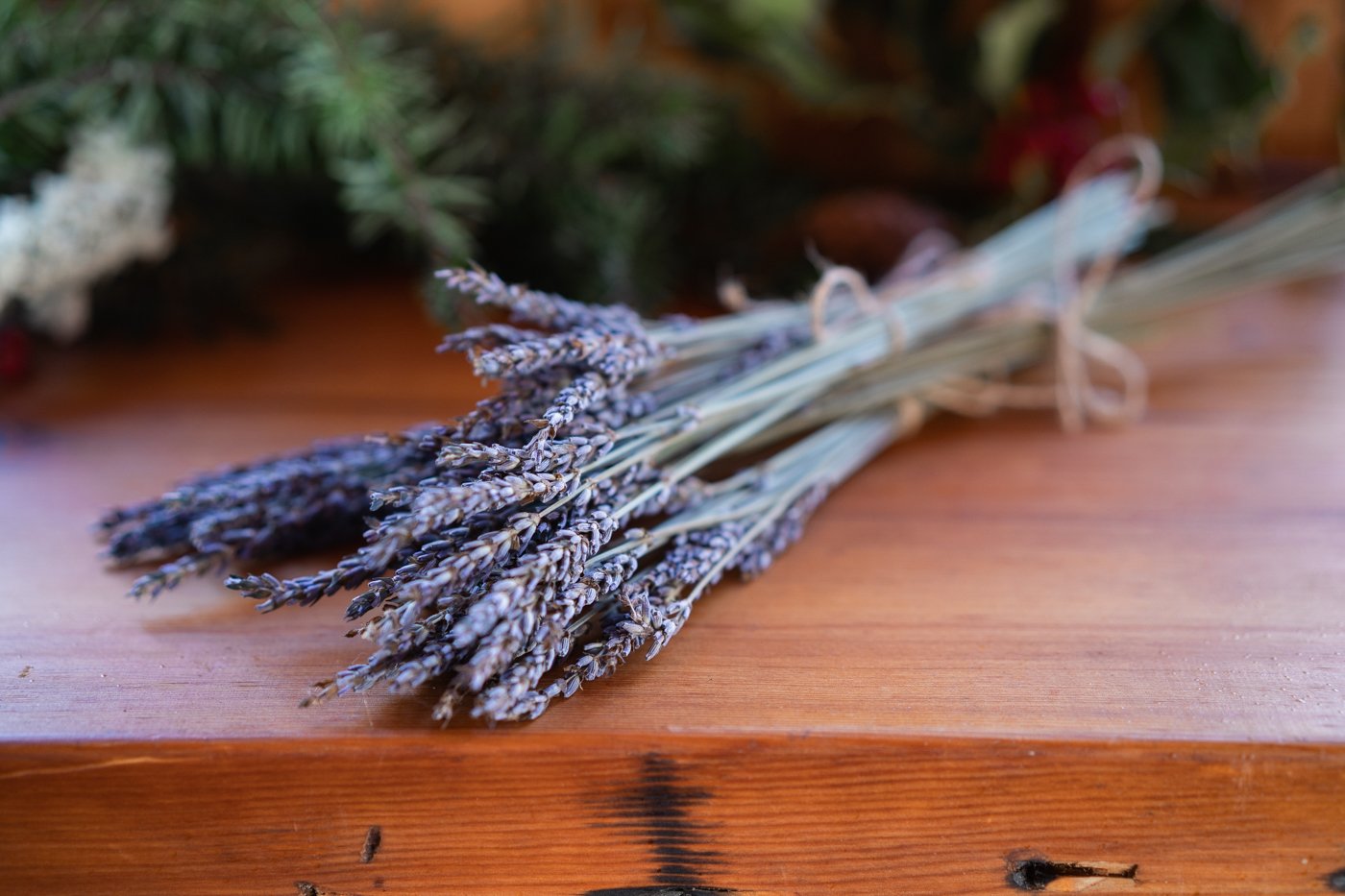
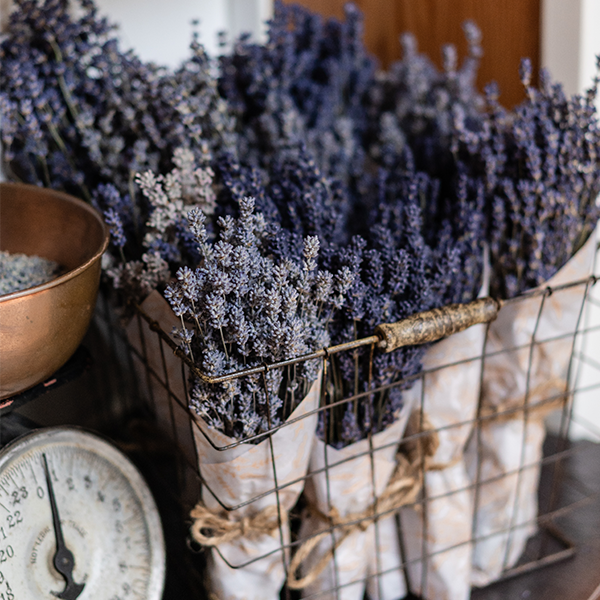
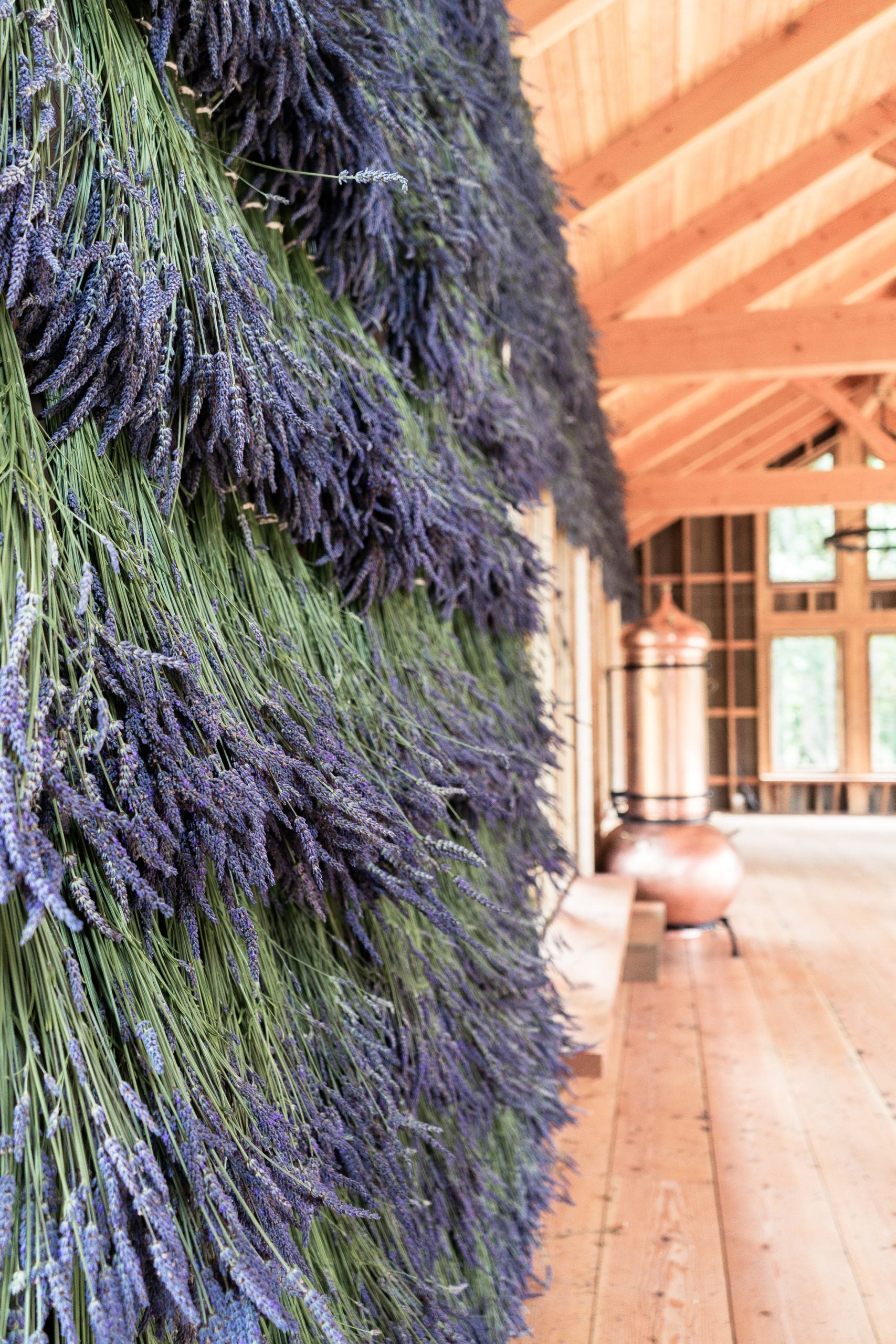
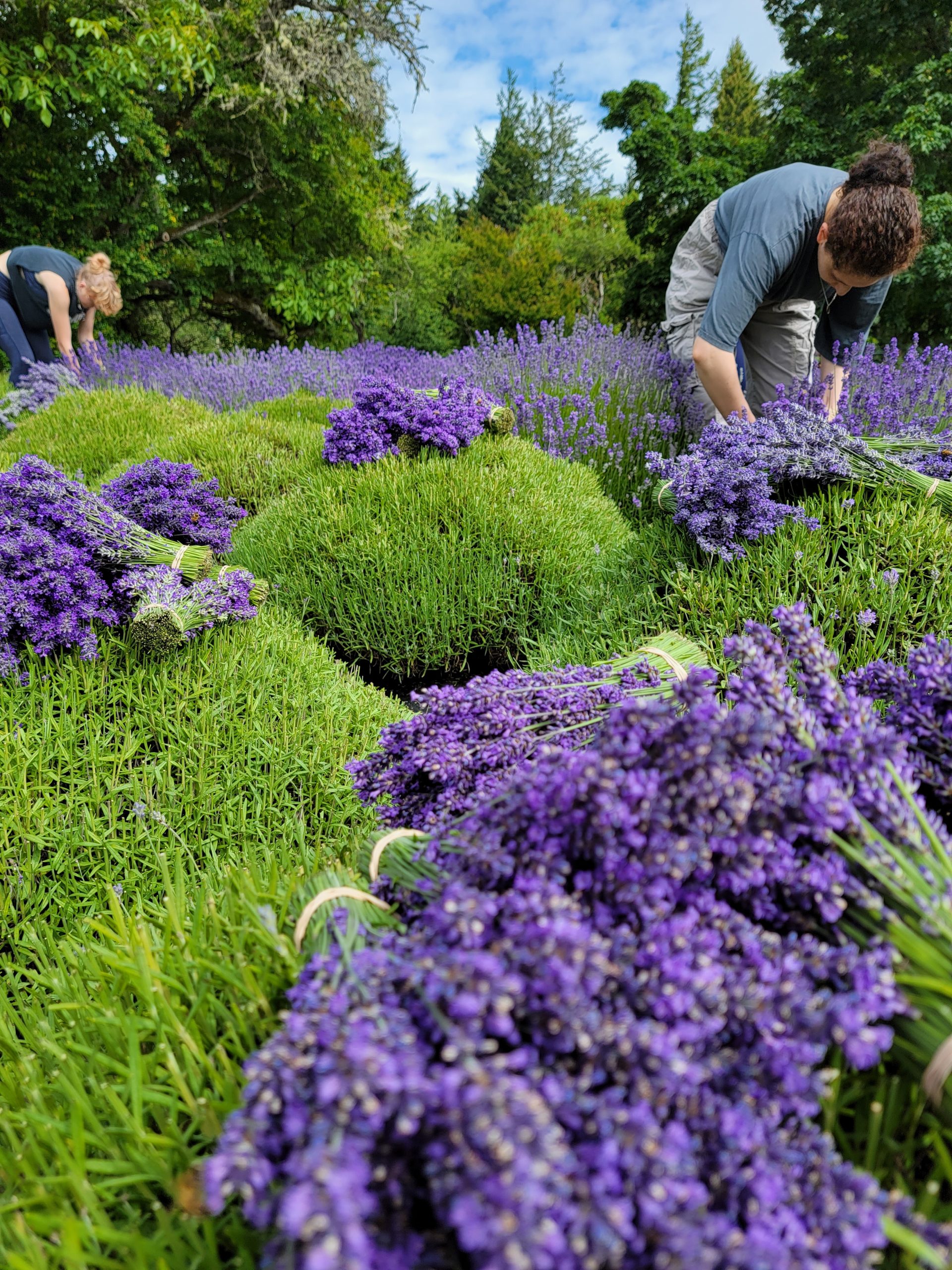
Our lavender season starts in June, when the English lavenders flower. The fresh stems are cut and bundled by hand and hung on the walls of our drying barn. The barn walls are usually covered with drying English lavender from late June to early July. After this, the hybrid lavender, Grosso, blooms and you can enjoy a sea of blue stretching from our patio to the forests surrounding the fields. By mid July, the lavender in the barn will be gradually switched over as we harvest the main lavender field. Once the lavender is dry it’s taken down from the wall and then further processed to remove the flower buds, or to create dried flower arrangements.
Lavender Distillation

The lavender that is not dried is hand harvested fresh and packed into one of our stills where it undergoes steam distillation. The distillation process takes about 3 hours and we often do multiple runs a day from mid-July into September. The result is essential oil and hydrosol – also known as distilled floral water.
If you are visiting in the summer, you might see one of our distillation stills in action. Feel free to ask one of our staff members how they work! We also distill other botanicals like Western Cedar leaf and Nootka Rose and you will find samples of these in the farm store to try.
The Final Harvest
Through the summer, the lavender field turns from blue to green as we harvest from the edges of the field moving inwards. Some plants will show a second growth but most of the plants have just one bloom per season. We go through the whole field once more in the fall to prune the plants before the winter. This is labour intensive but an important step to keep the plants healthy and allow for a clean growth the following year.